
Memorie di una principessa etiope
First published in Italian in 2003 by prestigious publisher Neri Pozzi, Turin, Italy, the book received excellent reviews and was heartily welcomed in academia both for its literary style, and for its historical value.
The English version, translated by Elizabeth Alpass will be available in early 2027.
"A marvelous book that takes us into a world that is completely unknown to us westerners, the complex world of the Ethiopian aristocracy of the 20s and 30s."
Professor Angelo del Boca, author and historian
In the beginning of the 1930’s, the sumptuous palace (Guebi) of the noble Nassibou Zamanuel stood in the centre of the Ethiopian capital, Addis Ababa. It was surrounded by a fifty-thousand square meter park, adorned with tall trees and ornamental plants imported from all over the world. The Guebi consisted of dozens of rooms elegantly furnished with Louis XVI and Chippendale-style furniture, Sèvres china and immense tapestries from Beauvais. Some eighty household staff, butlers, domestics, cooks and gardeners were assigned to the running of the palace, working under the watchful eye of Dejazmatch Nassibou, a divinely handsome man - over six feet tall, with attractive, serene features and an athletic figure clad in a dazzling general’s uniform.
In the life of the Dejatch, all seemed remarkable and idyllic as in a fairy-tale: from the time he conquered the heart of the young Atzede Mariam Babitcheff, following a breath-taking race at the Imperial Race Course in the presence of the Regent, Ras Tafari Makonnen; to the time he took her on a pilgrimage to the top of Mount Menagesha, where the hermit-saint, Wolde Mariam, foretold the birth of five children to the bride.
On October day in 1935, however, the lovely fairy tale came to an abrupt end. By order of Benito Mussolini, the Italian forces began the invasion of Ethiopia from North to South, without a declaration of war.
Dejatch Nassibou fought with valour to defend his culture, the ancient Coptic-orthodox civilization which made of Ethiopia a Christian land in the heart of Africa. The forces however were far too disparate, and the conflict would spell the end of the Ethiopian Empire and of the splendour of the Nassibous.
On 21 June 1936, Ivan Babitcheff, father-in-law of Dejatch Nassibou, was arrested. On 19 October, the Dejatch dies in a clinic in Davos, Switzerland. In the months that follow, all the Nassibou family are forced into exile.
More than sixty years after these events, Martha Nassibou, daughter of the Dejazmatch, tells the tale of the incredible journey of her family, exiled in Italy from the end of 1936 until August 1944. Eight years of exile in the “vacation resorts” of Mussolini, for no fault other than being the wife and children of Dejatch Nassibou Zamanuel, who had conducted himself with extreme correctness in war, an attitude certainly not reciprocated by Viceroy Rodolfo Graziani.
A valuable historic testimony, the book sheds light on the world of that Ethiopian aristocracy, “juggling between the wish to preserve their feudal heritage and a powerful longing for modernity."
Professor Angelo del Boca
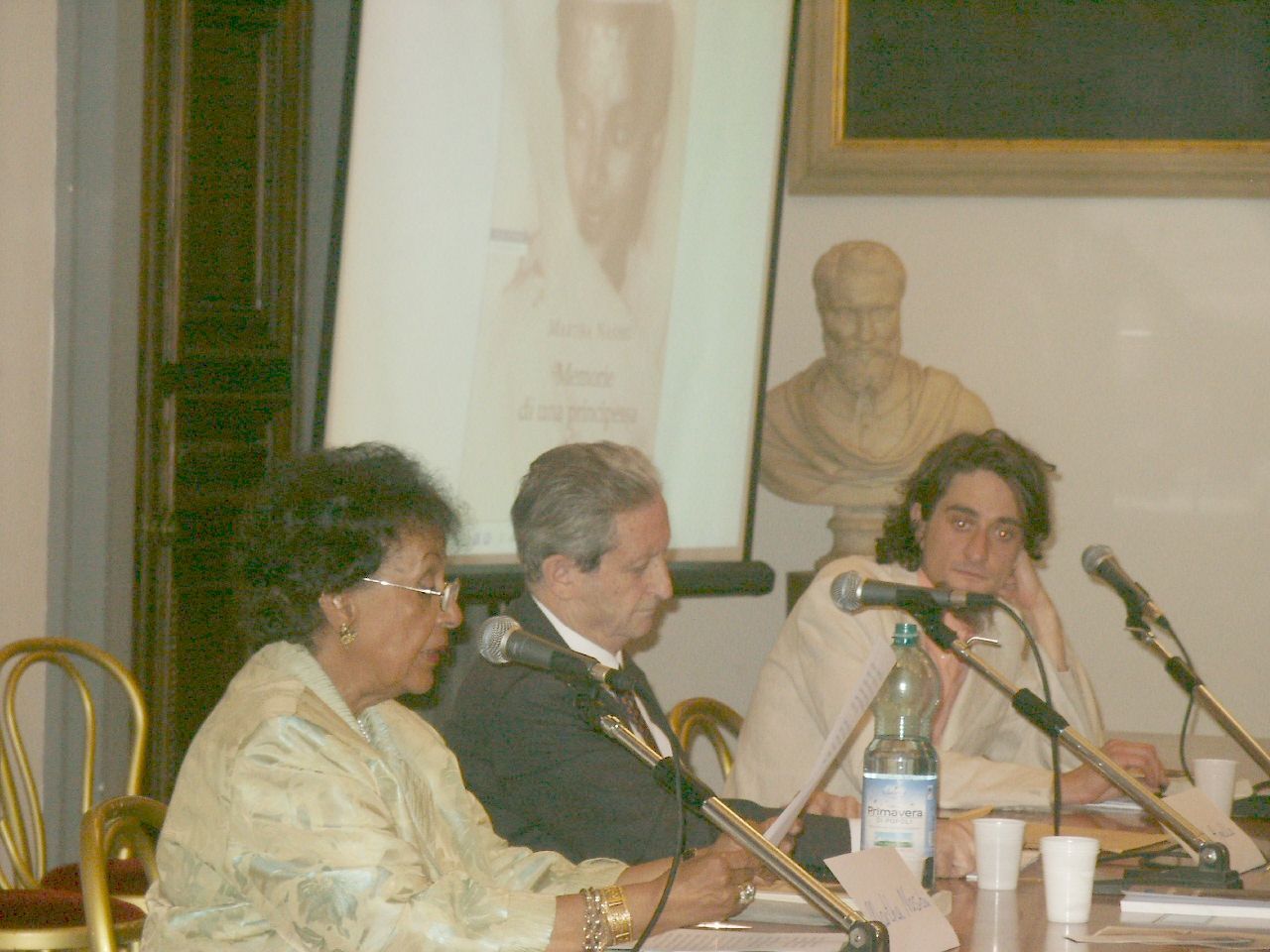
The first book presentation took place at the Campidoglio, Rome, Italy, on ........ in the presence of numerous journalists, academics, authors, friends and family.
Introduction by Dr Matteo Dominioni, Historian, University of Torino
Presentation of the book by Dr Nello Ajello, journalist and author.
Testimonials

"If you’re looking for a top-quality company you can trust, you’ve found it! I have never been so satisfied with a service provider. I recommend them highly."
Jane Faber, New York
"If you’re looking for a top-quality company you can trust, you’ve found it! I have never been so satisfied with a service provider. I recommend them highly."
Jane Faber, New York
"If you’re looking for a top-quality company you can trust, you’ve found it! I have never been so satisfied with a service provider. I recommend them highly."
Jane Faber, New York
"If you’re looking for a top-quality company you can trust, you’ve found it! I have never been so satisfied with a service provider. I recommend them highly."
Jane Faber, New York
Marco Innocenti, Il Sole 24 Ore
18-09-2005
FabuFit
Memoirs of an Ethiopian Princess is a book that draws the reader in. Certain passages—such as the encounter with the hermit, the mother’s laughter radiating an immense sense of joy, and the moment when she raises her eyes and silently gazes at the stars—bear the mark of poetry.
Alba Laura Arciello
15-02-2007
FabuFit
This is what an extraordinary woman teaches us through her story, in which, through both good and bad, she reaches deep into the human experience, leaving in turn an indelible mark on our inner lives. Because when a book is written from the heart—and, above all, pulses with truth—each of us, on reaching the final page, feels that something within has changed, and what seemed impossible becomes reality... with time, pain can be transformed into love.
Contact us any time
Contact us any time
We will get back to you as soon as possible.
Please try again later.